Working Principles and Classification of Roller Bearings
Roller bearings are fundamental rolling components widely used in mechanical transmission systems, designed to reduce friction resistance and support rotating or moving mechanical parts. Different from needle roller bearings with ultra-slender rollers, standard roller bearings adopt cylindrical rolling elements with a balanced length-to-diameter ratio, achieving an optimal balance between load capacity, operating speed and structural stability. Their core working principle is to convert sliding friction between mechanical parts into low-resistance rolling friction, thereby improving mechanical operating efficiency and reducing component wear.
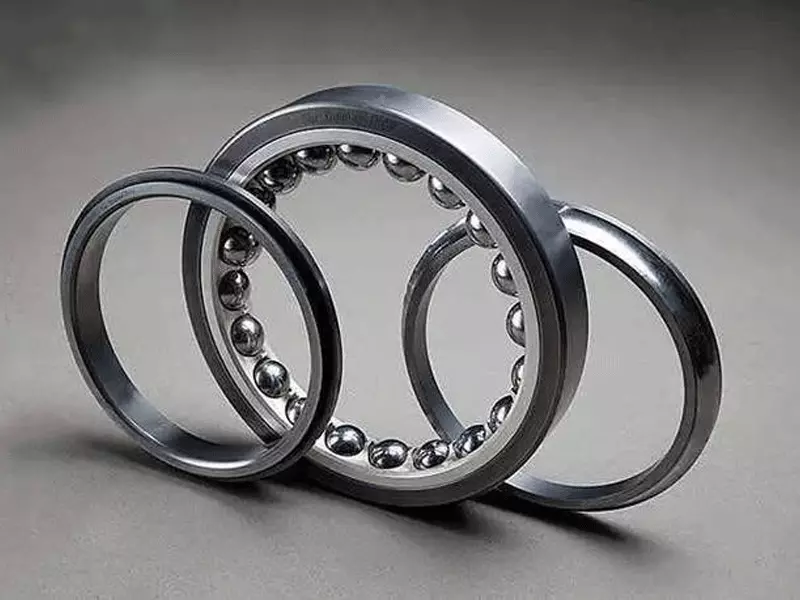
According to structural design and force-bearing characteristics, roller bearings can be classified into cylindrical roller bearings, tapered roller bearings, spherical roller bearings and track roller bearings. Cylindrical roller bearings focus on bearing heavy radial loads and are suitable for high-speed rotating equipment such as motors and generators. Tapered roller bearings can bear combined radial and axial loads, widely used in automobile wheel hubs and transmission systems. Spherical roller bearings feature self-aligning performance, adapting to shaft deflection and installation deviation, and are commonly used in heavy-duty engineering machinery and mining equipment.
Track roller bearings, a special branch of roller bearings, are designed for linear track operation. They adopt thick-walled outer rings with crowned surfaces, which can reduce running friction and avoid deviation during linear movement. All roller bearings are made of high-strength bearing steel through integral quenching and tempering treatment, with high surface hardness and wear resistance. With strong structural stability and wide adaptability, roller bearings can operate stably under high temperature, heavy load and continuous working conditions. They are core components to ensure the efficient and reliable operation of various mechanical equipment in industrial manufacturing, transportation and energy industries.
